

Pampore, a quaint tiny hamlet in India, referred to as “Saffron Town” is known for its prized saffron cultivation, the world’s most expensive spice, valued at $800 (U.S.) per ounce.
Saffron has a history that dates back to over 3,000 years, originating in Persia, now called Iran.
Every year, this small town with a population of only 22,000 welcomes tourists and businessmen from around the globe, all drawn to its exceptional saffron harvest.
Beyond saffron, Pampore is also celebrated for its exquisite handicrafts, including intricate carpet weaving and woodcarving.
Breathtaking
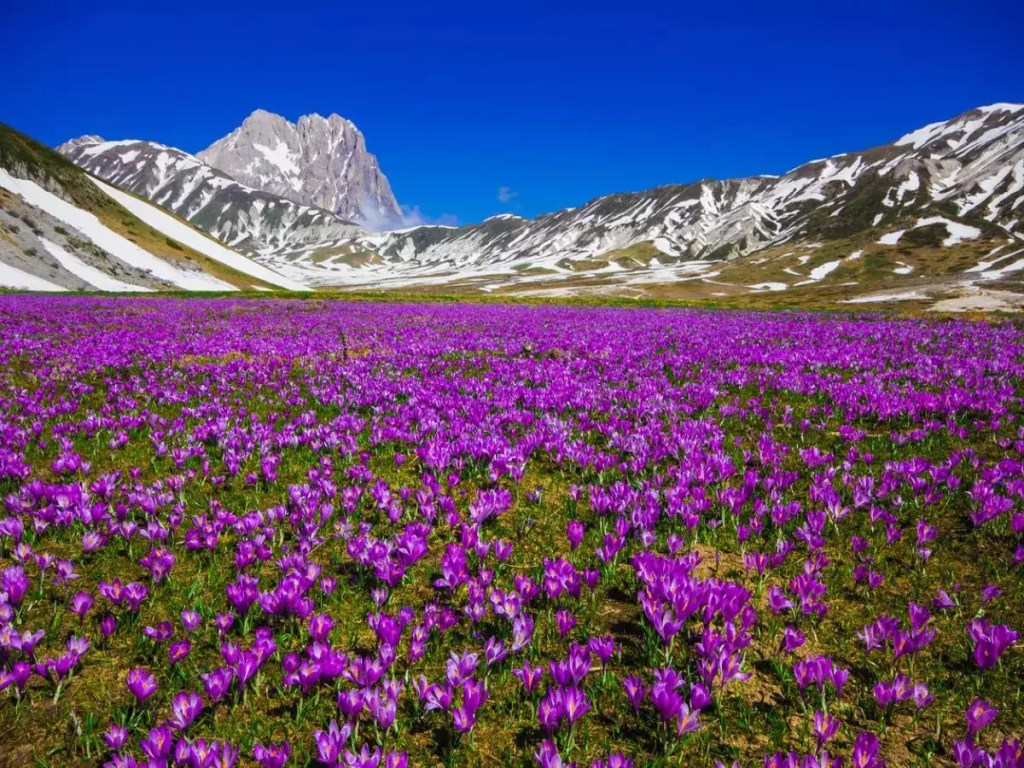
As you step outside the town, a breathtaking panorama unfolds:
Endless expanses of lavender-hued flowers stretch as far as the eye can see, with millions of delicate Crocus sativus blooms swaying gently in the breeze. This stunning landscape is set against the majestic backdrop of the Himalayas, making Pampore a truly unforgettable destination.
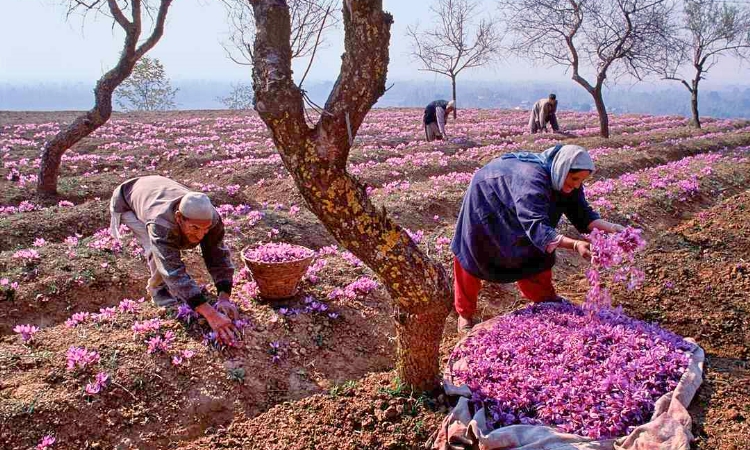
And, it’s here that the people from Pampore harvest saffron, a spice widely used in cooking.
Highly Prized
Saffron was highly prized in ancient civilizations, including the Egyptians, Greeks, and Romans, for its vibrant yellow-orange colour, unique flavor, and medicinal properties. It was traded extensively along the Silk Road, a network of ancient trade routes.
As trade and cultural exchange flourished, saffron cultivation spread to other parts of the world, including:
- Europe: Saffron was introduced to Europe by the Phoenicians and later cultivated in Spain, Italy, and France.
- Asia: Saffron was introduced to Asia through the Silk Road and cultivated in countries like India, China, and Kashmir.
Saffron’s rich history and cultural significance have made it a prized spice, not only for its flavour and color but also for its emotional and symbolic value.
Why Is Saffron So Expensive.
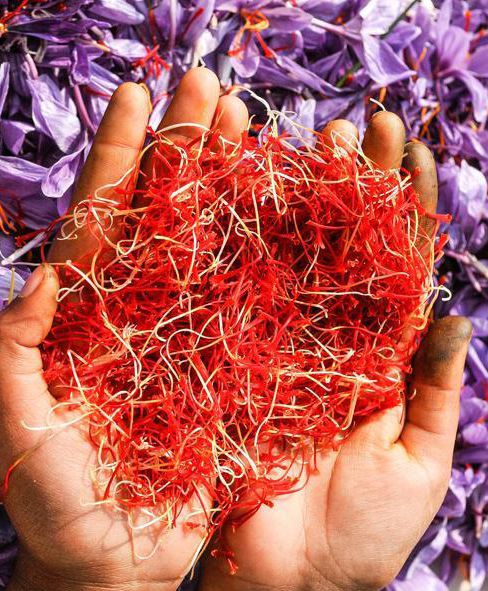
Each saffron flower produces only three red stigmas – the saffron threads. These threads all have to be handpicked, a time consuming, labour intensive process.
It takes about 75,000 saffron flowers to produce one pound of saffron.
Saffron flowers are extremely delicate – requiring extra care when harvested.
Once the threads are harvested they need to be carefully dried to preserve colour, flavour and aroma, a process requiring meticulous attention to details.
What does saffron taste like?
The taste is unique and complex – earthy and sweet, a hint of bitterness, plus floral and honey-like.
How Is Saffron Used In Cooking?
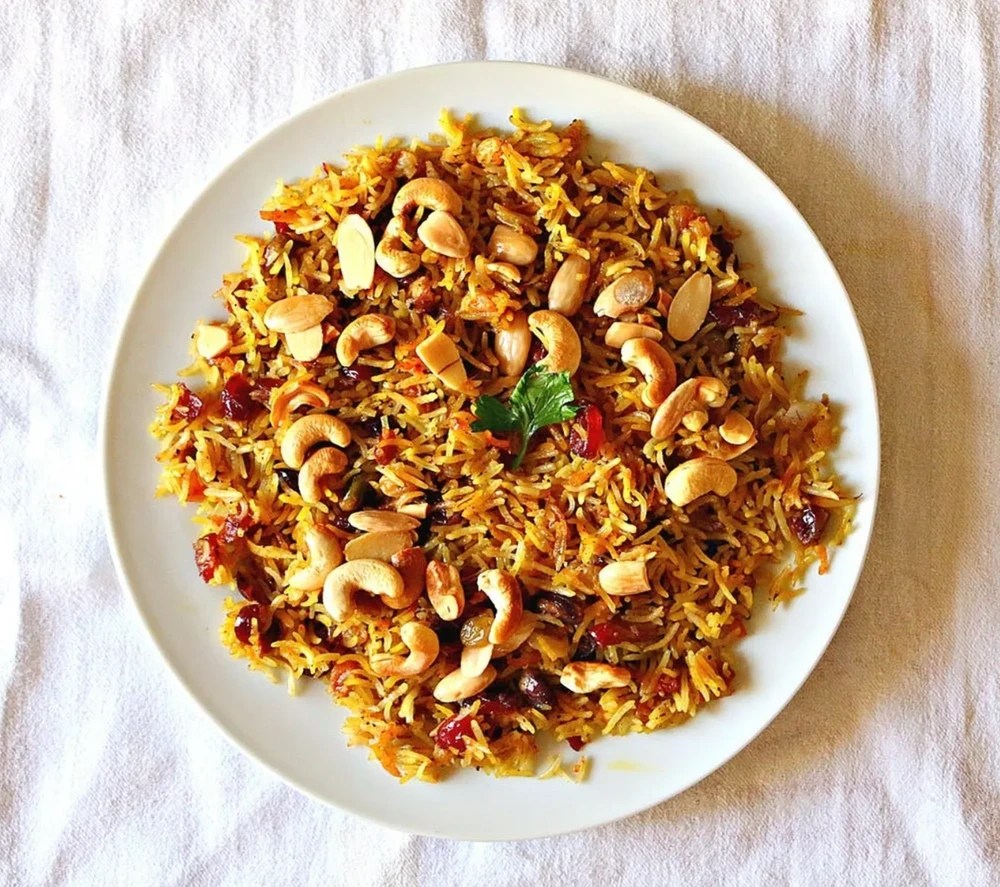
- Saffron often is infused in liquid, ground into powder, or added directly to dishes like rice, stews, and soups.
- It enhances dishes with its distinctive taste and golden hue.
- Dishes like paella, risotto, and biryani benefit from it especially, adding extra flavour, and taste dimension.
But despite its high costs saffron is one of the most sought-after spices in the world.
Wide Uses
Saffron not only is widely used across the globe in various cuisines, but also in traditional medicines, and industries:
Saffron is found in Chinese, Ayurvedic, Persian, and Unani, natural medicines for its health benefits.
It also is used in cosmetics, skincare products, nutraceuticals, and textile dyeing.
A Final Word On Saffron
It’s expensive and that’s why there a lot of fake saffron products on the market.
So be beware – of low, low, prices and only buy it from a reputable merchant.
Interested in cooking with saffron?
The respected website – All Recipes – features 90 different recipes using saffron.
And best of all each recipe is reviewed and rated.
 LGF Publishing
Leave a comment